Korean desserts have become global comfort food, thanks to their playful textures, elegant flavors, and café-ready presentation. From icy bowls of bingsu to nostalgic dalgona candy, these sweets offer more than sugar. They tell stories of street markets, family celebrations, seasonal ingredients, and modern Korean food culture.
Why Korean Desserts Are Loved Worldwide
Korean sweets stand out because they rarely rely on heavy richness. Many desserts combine gentle sweetness with chewy rice cakes, shaved ice, fruit, roasted grains, nuts, honey, or red beans. The result feels satisfying without being overwhelming.
Texture also plays a major role. A single dessert may be soft, crunchy, creamy, sticky, and icy at once. This contrast makes Korean desserts exciting for people trying them for the first time. It also explains why they photograph so well in cafés and on social media.
Another reason for their popularity is the balance between tradition and trend. Some treats come from royal kitchens and holiday rituals. Others began as humble street snacks. Today, Korean bakeries and dessert cafés reinvent them with matcha, chocolate, mango, cheese, coffee, and premium teas.
Bingsu: Korea's Iconic Shaved Ice Dessert
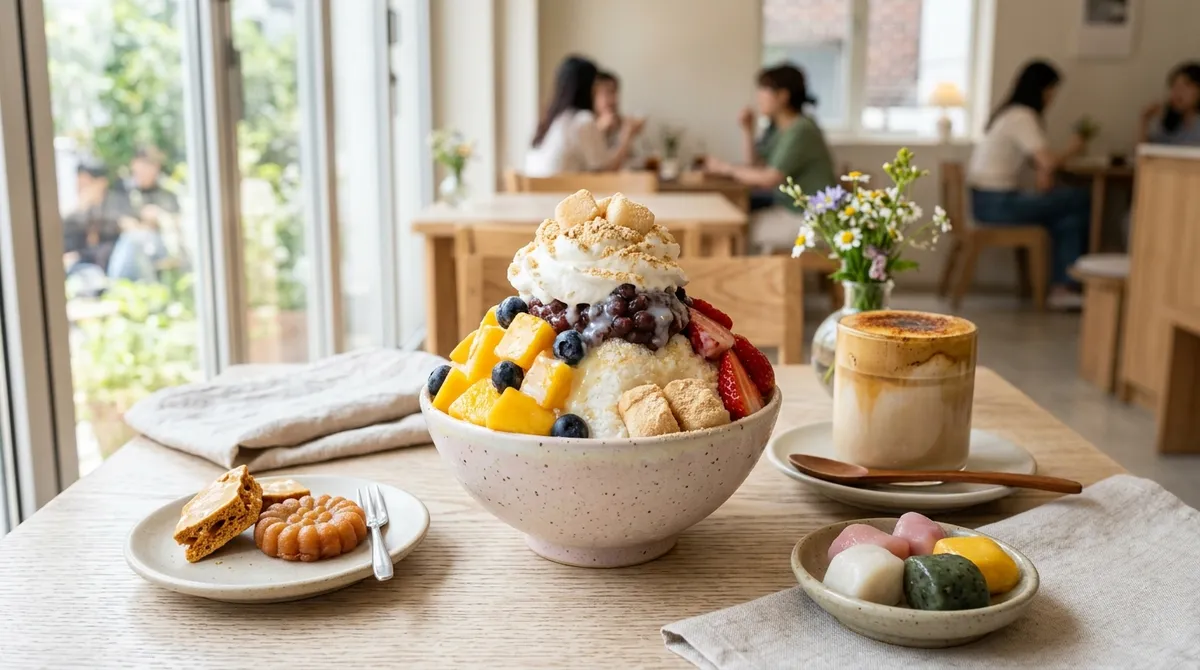
Bingsu is one of the most recognizable Korean desserts. At its simplest, it is finely shaved ice served with sweet toppings. However, modern versions can look like elaborate dessert bowls, layered with fruit, syrups, condensed milk, ice cream, nuts, or chewy rice cake pieces.
The classic version is patbingsu, which features sweetened red beans. Red bean may surprise some newcomers, but it is widely used in East Asian desserts. Its earthy sweetness pairs beautifully with milk ice, shaved ice, and soft rice cakes.
Injeolmi bingsu is another beloved style. It uses roasted soybean powder and small pieces of chewy rice cake. The flavor is nutty, mild, and comforting. It is especially popular with people who prefer desserts that are not too sweet.
Fruit bingsu has become a café favorite. Mango bingsu, strawberry bingsu, melon bingsu, and mixed berry bingsu are common choices. These versions often use fresh fruit, fruit sauces, whipped cream, and sometimes a scoop of ice cream.
How To Enjoy Bingsu Like A Local
Bingsu is usually served in a large bowl, making it ideal for sharing. Many people mix the toppings lightly into the ice before eating. Others prefer to work from the top down, tasting each layer separately.
The best bingsu has a snow-like texture. The ice should feel soft, not crunchy. Milk-based bingsu has a creamier mouthfeel, while water-based shaved ice tastes lighter and more refreshing. Either style works well during hot weather.
Dalgona: The Sweet Candy With A Nostalgic Crunch
Dalgona is a simple Korean sugar candy made from melted sugar and a small amount of baking soda. When mixed, the sugar foams and turns into a crisp, caramel-like treat. It is usually pressed flat and stamped with a shape before cooling.
For many Koreans, dalgona is linked to childhood memories and street vendors. Children often tried to carve out the stamped shape without breaking it. If they succeeded, they might receive another candy as a reward.
The candy became famous internationally after appearing in Korean pop culture. Since then, dalgona has inspired home recipes, café drinks, cookies, cakes, and dessert toppings. Its appeal comes from its simplicity. It tastes like toasted sugar, with a light bitterness that balances the sweetness.
Dalgona should be eaten carefully because it hardens quickly. It can be enjoyed on its own, crumbled over ice cream, or used as a crunchy topping for lattes and milkshakes.
Hotteok: A Warm Street Dessert For Cold Days
Hotteok is a Korean sweet pancake often sold at street stalls during winter. The dough is filled with a mixture of brown sugar, cinnamon, and chopped nuts or seeds. It is then pressed on a griddle until golden and crisp outside.
The magic happens when the filling melts. A fresh hotteok has a chewy crust and a hot syrupy center. That contrast makes it one of Korea's most comforting street foods.
Traditional hotteok often includes peanuts or sunflower seeds. Modern versions may contain cheese, green tea, chocolate, sweet potato, or savory fillings. Still, the classic cinnamon sugar version remains the favorite for many dessert lovers.
Yakgwa: A Honey Cookie With Deep Roots
Yakgwa is a traditional Korean confection made with wheat flour, sesame oil, honey, and rice wine. The dough is shaped, fried, and soaked in a sweet syrup. The finished cookie is tender, fragrant, and slightly sticky.
This dessert has a long history and was often served during ceremonies, holidays, and special gatherings. Its floral shape and glossy finish make it beautiful on a dessert plate.
Yakgwa has returned to popularity among younger food lovers. Many cafés now serve it with coffee, ice cream, or cream-based desserts. Its honeyed flavor works especially well with bitter drinks such as black coffee or strong tea.
Tteok: Chewy Rice Cakes In Many Forms
Tteok refers to Korean rice cakes, and it covers a wide range of sweet and savory foods. In desserts, tteok is loved for its chewy texture. It can be steamed, pounded, filled, coated, sliced, or shaped into festive designs.
Songpyeon is a famous type of tteok associated with Chuseok, Korea's harvest festival. These small half-moon rice cakes are often filled with sesame seeds, beans, or sweet fillings. They are steamed over pine needles, which gives them a subtle fragrance.
Injeolmi is another popular rice cake. It is coated in roasted soybean powder and has a soft, stretchy bite. It can be eaten alone or added to bingsu, toast, waffles, and ice cream desserts.
Chapssaltteok is made with glutinous rice and often filled with sweet red bean paste. Its texture is soft and springy. Many people compare it to Japanese mochi, though Korean versions have their own flavors and traditions.
Refreshing Korean Dessert Drinks
Korean dessert culture also includes sweet drinks. Sikhye is a traditional rice punch made with malted barley and cooked rice. It is gently sweet and often served cold after meals. Small grains of rice float in the drink, giving it a unique texture.
Sujeonggwa is another classic beverage. It is made with cinnamon, ginger, and dried persimmons. The flavor is warm, spicy, and sweet. Although it can be chilled, its aroma makes it especially comforting during cooler months.
Hwachae is a fruit punch that comes in many versions. Watermelon hwachae is especially popular in summer. It often combines watermelon, fruit pieces, ice, and a sweet drink base such as milk, soda, or fruit juice.
Modern Korean Dessert Cafés And Global Trends
Korean dessert cafés have helped bring these sweets to international audiences. Many cafés focus on presentation as much as flavor. Tall bingsu bowls, glossy pastries, layered drinks, and artful plating are part of the experience.
Modern bakeries also blend Korean flavors with Western techniques. You may find croissants filled with red bean cream, cakes flavored with black sesame, or waffles topped with injeolmi and condensed milk. These combinations feel familiar yet distinctly Korean.
Popular Korean ingredients include red bean paste, roasted soybean powder, matcha, yuzu, chestnut, sweet potato, black sesame, honey, and rice flour. These flavors bring depth and variety to desserts that might otherwise taste ordinary.
Tips For Trying Korean Desserts For The First Time
If you are new to Korean sweets, start with bingsu. It is accessible, refreshing, and easy to share. Mango bingsu is a safe choice for fruit lovers, while patbingsu offers a more traditional experience.
For a street food experience, try hotteok or dalgona. Both are simple, affordable, and memorable. Hotteok is best eaten warm, while dalgona is ideal for anyone who enjoys caramel flavors.
If you like chewy textures, explore tteok. Injeolmi is mild and nutty, while filled rice cakes offer more sweetness. Pair them with tea or coffee to balance their dense texture.
For traditional flavors, choose yakgwa, sikhye, or sujeonggwa. These options show a different side of Korean dessert culture. They are less about visual drama and more about aroma, heritage, and balance.
Conclusion
Korean desserts offer a delicious mix of history, creativity, and comfort. Bingsu brings icy refreshment, dalgona adds nostalgic crunch, hotteok warms the hands, and tteok celebrates the beauty of chewy rice cakes. Whether served at a market stall, family table, or stylish café, these sweets reveal why Korean dessert culture continues to win fans around the world.