
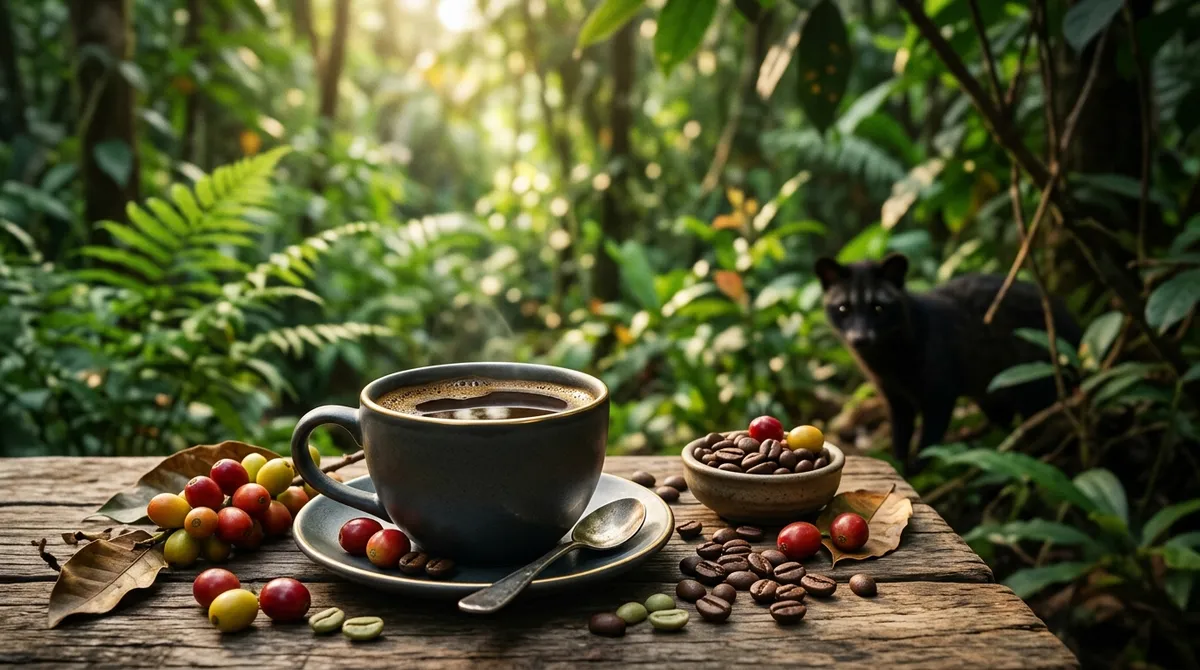
In the world of gourmet coffee, there exists a unique and fascinating variety known as civet coffee, often referred to by its Indonesian name, Kopi Luwak. This exclusive coffee has intrigued connoisseurs and coffee enthusiasts alike due to the unusual method of production, which involves a small mammal known as the civet cat. But what exactly makes this coffee special, and is it truly as delightful as its reputation suggests?
The Unique Journey of Civet Coffee
Civet coffee begins its journey in the lush coffee plantations of Southeast Asia, where the civet cat plays a crucial role in its development. These nocturnal creatures are known for their selective eating habits, choosing only the ripest coffee cherries to consume. As the cherries pass through the civet's digestive system, natural fermentation takes place, altering the chemical composition of the beans. Once excreted, the beans are collected, thoroughly cleaned, and processed to create one of the world's most expensive coffees.
The Flavor Profile of Civet Coffee
Many coffee enthusiasts are drawn to civet coffee for its reputedly superior taste. The fermentation process within the civet's stomach is believed to break down proteins that cause bitterness, resulting in a smoother and more aromatic brew. Descriptions of civet coffee often highlight its rich, earthy flavors with hints of chocolate and caramel. However, taste is subjective, and while some find it exceptionally pleasant, others may not notice a significant difference from conventional coffee.
Ethical Considerations in Civet Coffee Production
The production of civet coffee has raised several ethical concerns, particularly regarding the treatment of civets. In some regions, civet cats are kept in captivity and fed a diet primarily consisting of coffee cherries, which can lead to health issues and distress. Ethical sourcing is crucial for those who wish to enjoy civet coffee without supporting harmful practices. Consumers are encouraged to seek brands that prioritize humane treatment and sustainable practices, ensuring that the animals are not subjected to undue stress.
Coffee Culture and Civet Coffee's Place in It
Civet coffee has carved out a niche in the global coffee culture, attracting adventurous drinkers and luxury seekers. Its rarity and high price point often make it a status symbol among coffee aficionados. Despite this, its popularity has sparked debates about authenticity and quality, with some experts questioning whether it lives up to the hype. The growing interest in specialty coffees and unique brewing methods continues to fuel curiosity about civet coffee and similar exotic varieties.
Alternatives and Innovations in Coffee Production
As the demand for unique coffee experiences grows, so does the exploration of alternative production methods. Some companies are experimenting with synthetic fermentation processes that mimic the effects of the civet's digestive system, offering an ethical and environmentally friendly alternative. These innovations aim to provide consumers with the distinctive flavors of civet coffee without the associated ethical dilemmas or high costs.
In conclusion, civet coffee remains a captivating subject within the world of gourmet coffee, celebrated for its unusual production process and distinctive taste. However, the ethical implications of its production cannot be overlooked. As consumers become more conscious of their choices, the future of civet coffee may hinge on the balance between preserving its unique qualities and ensuring ethical treatment of the animals involved. Whether you are a coffee connoisseur or a curious newbie, exploring the diverse world of coffee can lead to exciting discoveries and a deeper appreciation for this beloved beverage.