
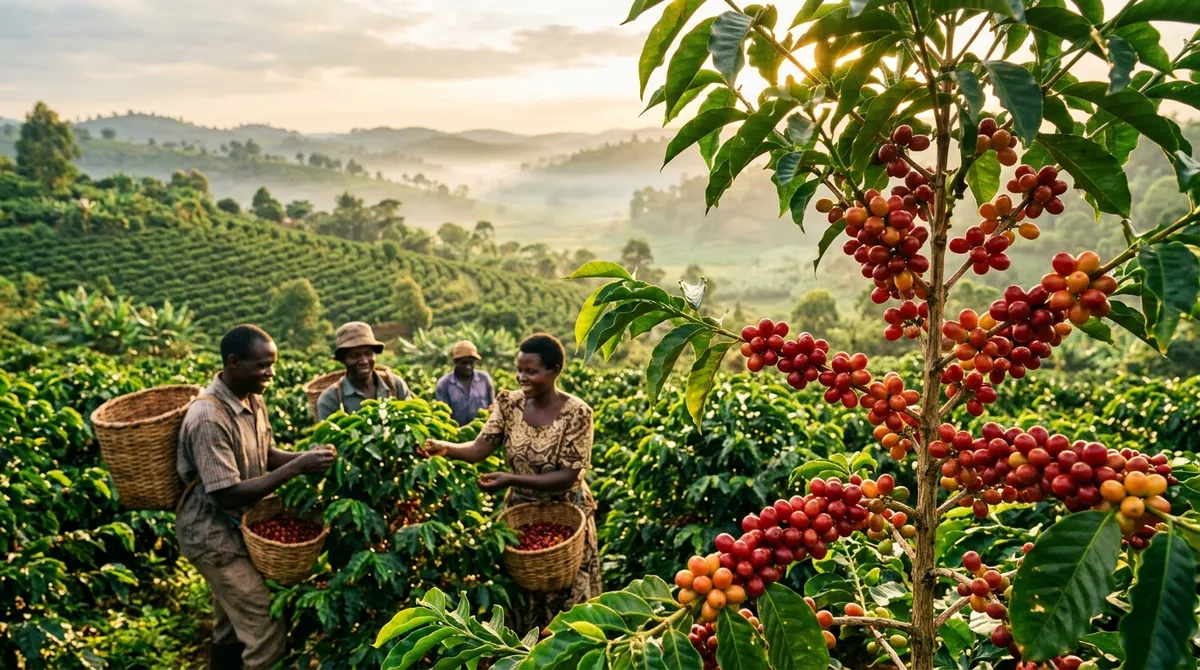
Uganda's coffee industry is experiencing a significant boost this crop year, with production expected to rise by 15%. This increase reflects the country's dedication to enhancing its agricultural sector, specifically coffee, which is one of its primary export commodities. Such a surge in production is attributed to improved farming techniques and favorable weather conditions.
The Ugandan coffee sector plays a crucial role in the national economy, employing millions and contributing significantly to export revenues. This year, the government and stakeholders have intensified efforts to bolster production through strategic initiatives and investments aimed at increasing yield and quality.
Factors Contributing to the Surge
Several factors have influenced the upward trajectory in Uganda's coffee production. Enhanced agricultural practices, including the introduction of high-yield coffee varieties and better pest control measures, have been pivotal. Additionally, the government has invested in training programs that equip farmers with modern farming techniques, leading to increased productivity.
Weather conditions have also favored coffee cultivation this year. The combination of adequate rainfall and optimal temperatures has created ideal conditions for coffee plants to thrive, resulting in a higher yield.
Role of Government and Stakeholders
The Ugandan government, alongside various stakeholders, has played a significant role in this year's production increase. Through policies aimed at boosting agricultural growth, they have provided resources and support to farmers. These efforts include subsidies on fertilizers and the establishment of farmer cooperatives that facilitate access to markets and credit facilities.
Moreover, the Uganda Coffee Development Authority (UCDA) has been instrumental in promoting the country's coffee on international platforms. Their initiatives have opened new markets and strengthened existing trade relationships, enhancing the export potential of Ugandan coffee.
Impact on the Economy
The projected increase in coffee production is set to have a positive impact on Uganda's economy. As coffee is a major export, higher production levels will likely lead to increased foreign exchange earnings. This boost can help stabilize the national economy and provide more opportunities for growth within the agricultural sector.
The coffee industry's expansion also promises job creation and improved livelihoods for those involved in the coffee value chain. From farmers to exporters, the entire sector stands to benefit from increased production and sales.
Challenges and Future Prospects
Despite the positive outlook, the Ugandan coffee industry faces challenges such as climate change and fluctuating global coffee prices. Addressing these issues requires continuous innovation and adaptation to sustain growth and resilience in the sector.
Looking ahead, Uganda aims to further increase its coffee production and quality. By focusing on sustainable farming practices and expanding its market reach, the country is poised to maintain its position as a leading coffee producer in Africa.
In conclusion, Uganda's coffee production surge this year marks a promising development for the country's agricultural sector. With continued support from the government and stakeholders, the future of Ugandan coffee looks bright, potentially leading to increased economic stability and prosperity.