
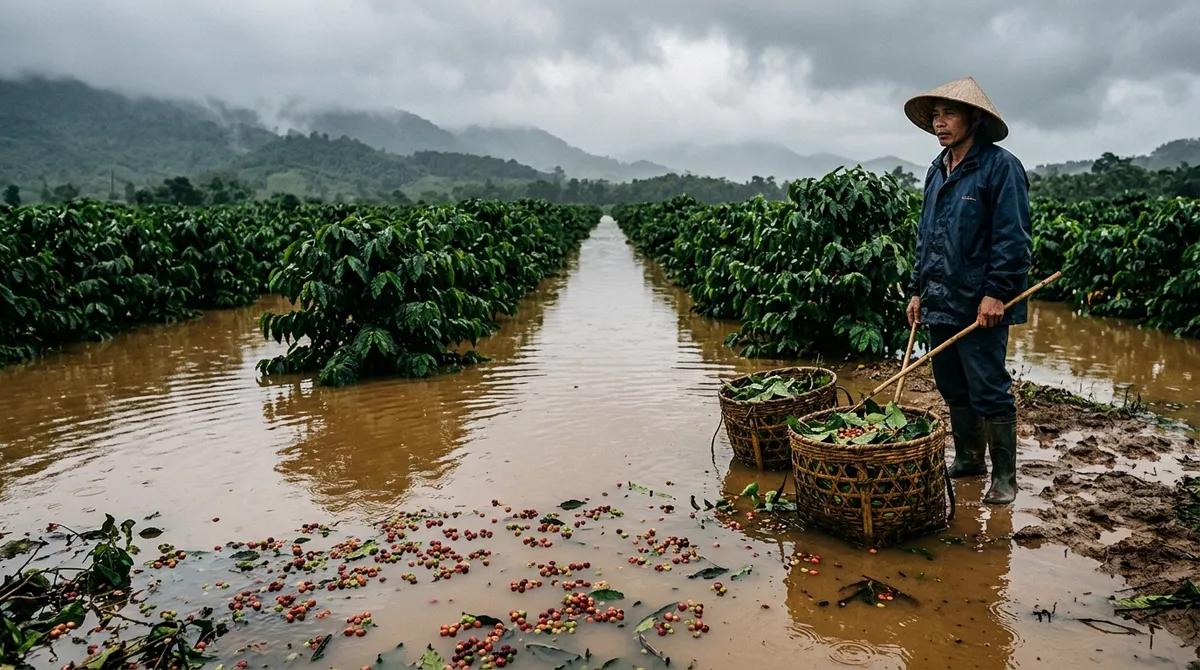
The Vietnam coffee industry faces a challenging season as unexpected weather patterns disrupt the annual harvest. Widespread floods in the Central Highlands have stalled production, affecting both the quality and quantity of coffee beans. This situation has prompted concerns among local farmers and international buyers who rely heavily on Vietnam's robusta coffee output.
Impact of Floods on Coffee Production
Vietnam's Central Highlands, known for its rich coffee plantations, is currently experiencing severe flooding. These adverse weather conditions have resulted in significant delays in the coffee harvest, which typically begins in October. The region accounts for a large portion of Vietnam's coffee production, making the timing of these floods particularly problematic for the industry.
The floods have not only delayed harvesting activities but also raised fears about potential crop damage. Coffee plants are highly sensitive to excessive water, which can lead to diseases and lower bean quality. This situation may result in reduced yields, affecting the overall supply chain and potentially increasing global coffee prices.
Challenges Faced by Farmers
Local farmers are at the forefront of this crisis, facing immense pressure to salvage what they can of their crops. Many farmers lack the resources to combat such natural disasters effectively, leaving them vulnerable to financial losses. The inability to harvest on time could lead to decreased income for farmers, many of whom rely on coffee as their primary source of livelihood.
In response, some farmers are seeking assistance from local authorities and agricultural experts to manage the situation. There are calls for better infrastructure and support systems to help mitigate the impact of future floods. However, immediate solutions are needed to address the current crisis and prevent long-term damage to the industry.
Global Implications
The disruptions in Vietnam's coffee production have far-reaching implications for the global coffee market. As one of the largest coffee producers in the world, any significant dip in Vietnam's output can influence global supply and demand dynamics. This situation might lead to an increase in robusta coffee prices, impacting coffee companies and consumers worldwide.
International buyers are closely monitoring the situation, as fluctuations in supply can affect their purchasing strategies. The uncertainty surrounding Vietnam's coffee harvest adds another layer of complexity to an already volatile market, which has been grappling with various challenges, including fluctuating demand and rising production costs.
Steps Toward Recovery
Efforts are underway to mitigate the impact of the floods on Vietnam's coffee industry. Local governments and organizations are working to provide support to affected farmers through financial aid and technical assistance. There is also an emphasis on developing long-term strategies to improve the resilience of the coffee sector against future climatic events.
Investment in improved infrastructure, such as better drainage systems and early warning mechanisms, could help reduce the impact of similar disasters in the future. Additionally, promoting sustainable farming practices may enhance the adaptability of coffee plantations to changing weather patterns.
The Future of Coffee in Vietnam
Despite the current challenges, Vietnam's coffee industry remains a vital part of the country's economy. With appropriate measures and support, the sector can recover from this setback and continue to thrive. It is crucial for stakeholders, including the government, farmers, and international partners, to collaborate in building a more resilient coffee industry.
As the industry navigates these turbulent times, there is hope that innovative solutions and collective efforts will pave the way for a more sustainable future. The resilience of Vietnam's coffee farmers, coupled with strategic investments, can help secure the industry's long-term success.